

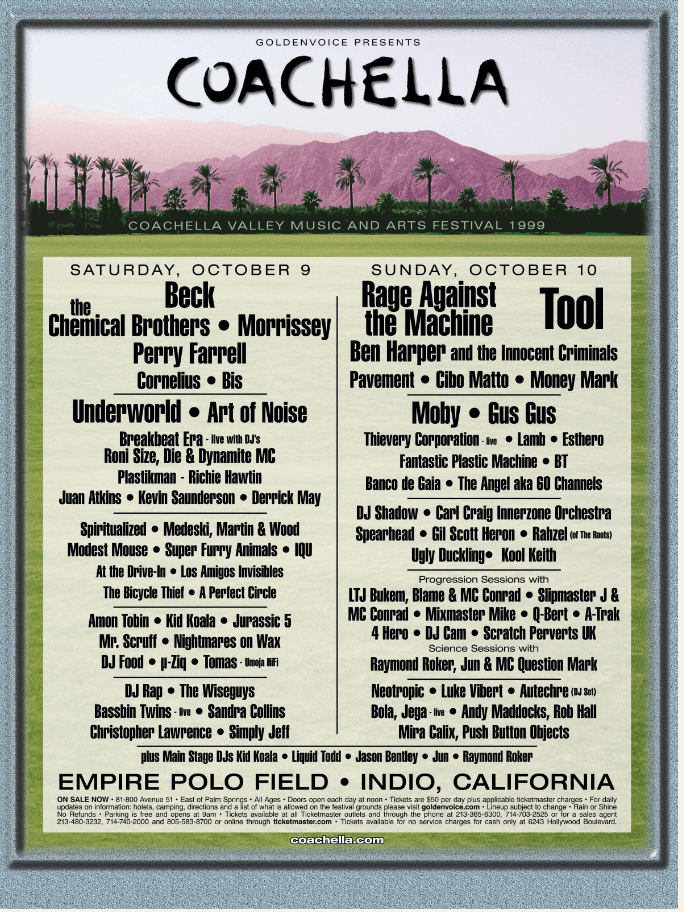
Today, we will be talking about one of the most well-known music festivals in the U.S., Coachella. Making its debut in October 1999 as a small alternative rock festival, Coachella was inspired by a 1993 Pearl Jam concert that was held at the Empire Polo Club in Indio, California.
Over the years, Coachella has grown exponentially in both scale and scope. From its initial two-day one weekend format with roughly 25,000 people in attendance, Coachella has expanded to two weekends featuring a diverse lineup that spans various music genres, with over 300,00 people in attendance over the two weekends most recently. While Coachella used to be solely about the music and artists, the festival now draws fans in for the overall experience, even those who aren’t in attendance. Let’s talk about it.
The Shift Towards a Pop Star Lineup
As Coachella’s popularity soared, so did its appeal to big-name artists. In 2001, the festival returned with headliners like Jane’s Addiction and Weezer. By 2003, it secured acts like Beastie Boys and Red Hot Chili Peppers, making a shift towards more mainstream music. This shift most definitely broadened the appeal for a more diverse demographic of people interested in attending. By 2008, Coachella had Prince’s legendary performance, and 10 years later Beyoncé’s iconic 2018 set. Ensuring the biggest mainstream artists to perform was a genius angle to draw fans and music lovers in. However, as the artists became more popular and technology continued to advance, so did the reputation of the festival.
2024 vs. 1999

The Influence of Social Media and Rise of the Influencer
In recent years, Coachella has become as much about the experience – and being seen experiencing it – as the music itself. The prominence of social media has undoubtedly transformed the festival into a hotspot for influencers and celebrities who broadcast their attendance to millions of followers. Instagram and Snapchat are flooded with festival looks, from the fashion to exclusive brand parties. Some dedicated fans who don’t attend are more excited to see their favorite influencers’ outfits, what brand they’re partnering with for their trip, and the friends they’re bringing along than to see the live broadcasts of the performances.

The influencer-centric approach has shifted the festival’s dynamics, where PR and marketing are as critical as the music. With Brands hosting events and activations, they are leveraging the festival’s backdrop to launch products or campaigns of their own. Coachella has become a must-visit for any influencer who wants to be seen or sell something trendy, enhancing its profile and shifting the focus somewhat away from the music itself.
Evolving With Culture and Technology
The transformation of Coachella into a commercial and cultural powerhouse illustrates a broader trend in the entertainment industry (whether intended or not), events evolve into platforms for more engagement beyond their original purpose. This change is mirrored in the integration of technology for a heightened experience beyond the artist’s performance to enrich attendees’ experience and offer new ways for artists and brands to interact with their audiences.
What to Think About
As Coachella continues to grow, it serves as an example of how music festivals can adapt to changing cultural and technological landscapes. It raises questions about the future of music festivals and whether music will stay the primary focus or become more about brands and marketing. Coachella is not just a music festival anymore but a way to network, influence, and sell new trends, brands, and images. The question becomes, has social media and technology shifted festival entertainment positively or negatively?
**IMAGES FROM PEXELS**
 Lexi Frick
Leave a comment